The comparison platform for logistics IT systems
Find the WMS, TMS, RPS or MES that truly suits your processes. Scientifically sound and independently validated by Fraunhofer IML.
Impartial. Scientifically based. Certified.
Find the WMS, TMS, RPS or MES that truly suits your processes. Scientifically sound and independently validated by Fraunhofer IML.
Impartial. Scientifically based. Certified.
The »Logistics IT Online Selection« provides you with an objective basis for making a decision about your logistics IT. The assessment is not based on marketing claims, partnerships or subjective judgements, but exclusively on transparent, functional criteria.
You specify the functional and business-related characteristics of your future WMS, TMS, RPS or MES solution.
You prioritise which functions are essential for your operations and which remain nice-to-haves.
You receive an objective, data-driven comparison of the systems that meet your requirements.
Each provider's details are validated by Fraunhofer IML, and the questionnaire is updated annually to reflect current market developments and new research findings.
More on the methodologyThe provider records and submits details of the system's functionalities via a questionnaire.
Fraunhofer IML verifies the information impartially.
Validated data is published and made available for comparison.
Annual evaluation of the questionnaire to reflect the market.
Our »warehouse logistics« community forms the foundation of our work. Together, over 100 validated providers are making the logistics IT market more transparent.


















































































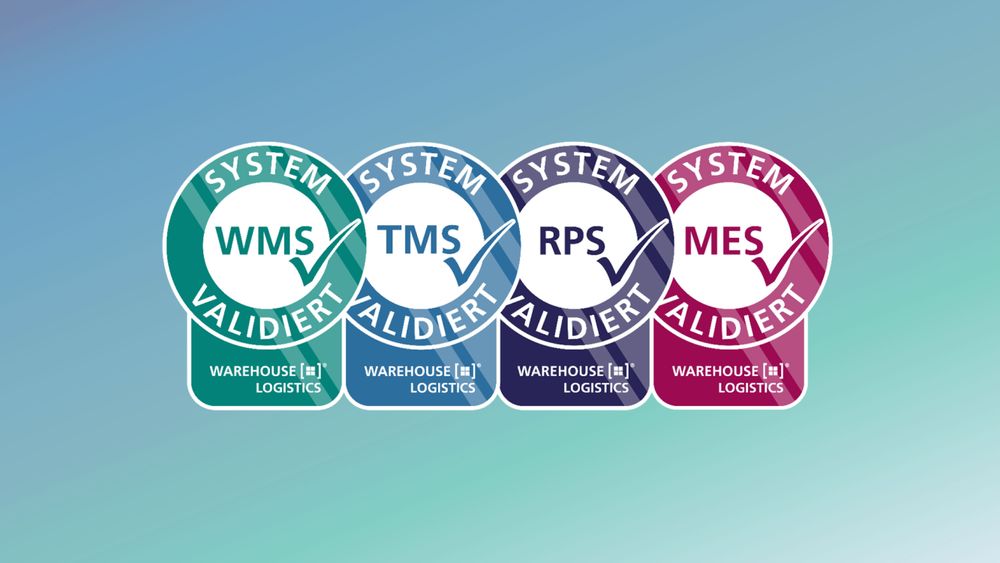
The »warehouse logistics« team has validated all logistics IT systems listed on warehouse-logistics.com, thereby bringing the Logistics IT Database up to date.
The »warehouse logistics« team has validated all logistics IT systems listed on warehouse-logistics.com, thereby bringing the Logistics IT Database up to date.
Read full article
Logistics software must work—that goes without saying. But does it also work for the people who use it every day? Software ergonomics and the design of the graphical user interface (GUI) are critical to acceptance, efficiency, and the success of an implementation. For this purpose, Fraunhofer IML has developed a structured Usability Check for logistics software within the "Picking Lab" project of the Leistungszentrum Logistik & IT, specifically identifying potentials for improving user experience, efficiency, and process reliability.

The implementation of new logistics IT is among the most complex projects in intralogistics. Whether a Warehouse Management System (WMS), Transport Management System (TMS), or other logistics software—errors during go-live can cause delivery delays, inventory discrepancies, process interruptions, and substantial additional costs. The success of such a project therefore depends not solely on selecting the right software, but above all on a structured testing strategy. Systematic testing phases make it possible to identify defects early, minimize technical risks, and ensure software quality prior to live operations. At the same time, documented tests and acceptances establish transparency, facilitate collaboration between the client and software vendor, and form the basis for legally compliant project execution.
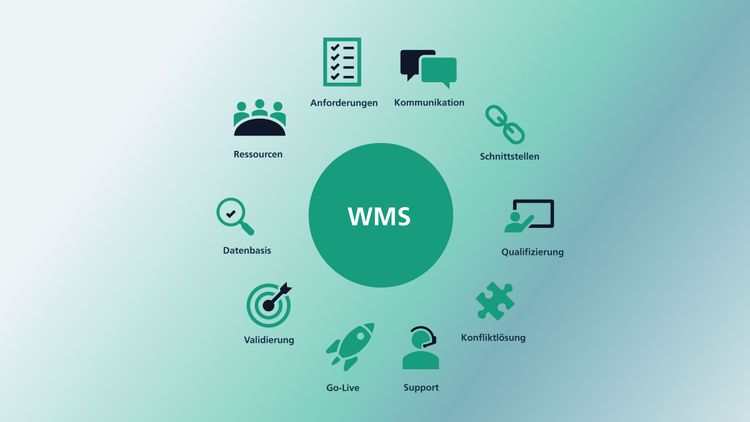
The implementation of a Warehouse Management System (WMS) is far more than a pure IT venture: it is a strategic project that transforms operational procedures in the warehouse, administrative processes, and cross-departmental collaboration. Implemented correctly, a WMS improves inventory visibility, reduces sources of error, supports order processing, and establishes the foundation for stable, standardized processes. For the transition into regular operation to succeed, all core fields of action must be structured and managed bindingly from the outset.
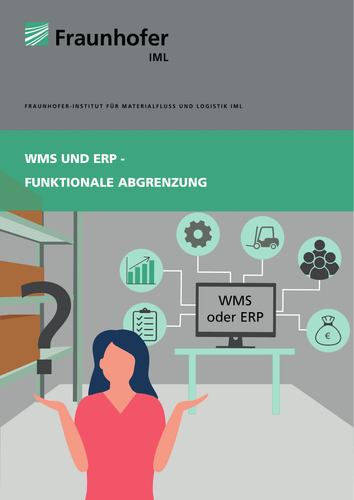
With the whitepaper »WMS and ERP – Functional Demarcation«, the »warehouse logistics team« at the Fraunhofer Institute for Material Flow and Logistics IML addresses a frequently debated question: Is this a WMS or an ERP functionality? Building upon a functional boundary definition of the two systems, the whitepaper also explores functionalities that must be allocated on a project-specific basis. Many end users and system owners find it difficult to distinctly assign specific features and modules to either the WMS or the ERP system. Furthermore, the increasing blurring of system boundaries exacerbates this lack of clarity and transparency. The whitepaper »WMS and ERP – Functional Demarcation« is designed to support practitioners in delineating the operational scope of WMS and ERP systems. In addition, it aims to raise awareness regarding the integration and operational challenges arising from functional overlaps. Concurrently, it explains and contrasts the different deployment architectures—evaluating a WMS as an integrated module within an enterprise ERP suite versus an independent, specialized best-of-breed (stand-alone) solution.
View all 25 publications

Imagine having to make an important decision: reorganising the warehouse layout, relocating a production line, installing new racking, changing forkli...

Maximum Warehouse Performance: Why Successful Automation Starts with PSIwms.

KNAPP has delivered a smart pallet handling automation solution for a manufacturing site in Lindesberg, Sweden, demonstrating its expertise in flexibl...

Würth Industrie Service and SSI SCHAEFER Jointly Advance Picking Robot Technology.

Modern warehouses generate and process more information than ever before. Inventory levels, order statuses, equipment conditions, error messages, and ...

The harvest comes round every year. So why does it still push so many warehouses to their limits?
Moving from proof of concept to productive reality in logistics.
The SKU (Stock Keeping Unit) code is a unique alphanumeric identifier used to distinguish and track product variants in a warehouse.

Acting as general contractor for part of Lufthansa Cargo’s LCCevo programme, Kardex has completed a new Medium Load Pallet System (MLP) at Frankfurt A...

FIS Informationssysteme und Consulting GmbH has once again successfully passed the quality assessment for SAP Extended Warehouse Management (SAP EWM) ...
A warehouse may appear efficient without actually being so. The difference between perception and certainty lies in the data: until space, time, and m...

Bluerock TMS (Bluerock), a cloud-native transportation management system provider, and SNS, a global supply chain consulting and systems implementatio...
»warehouse logistics« ist ein Langzeit-Projekt des Fraunhofer IML zur Erfassung, Bewertung und zum Vergleich von Logistik IT-Systemen. Die Plattform schafft Transparenz im Logistik-IT-Markt und unterstützt Unternehmen bei der strukturierten Auswahl passender Systeme.
Hinter dem Projekt »warehouse logistics« steht das Team »warehouse logistics« am Fraunhofer-Institut für Materialfluss und Logistik IML. Als interdisziplinäres Team aus InformatikerInnen, IngenieurInnen und LogistikerInnen verbinden wir Fachwissen aus Logistik und IT mit angewandter Forschung und verfolgen dabei einen herstellerneutralen Ansatz.
Die fachliche Erhebung und Validierung der Anbieter- und Systeminformationen erfolgt durch das Fraunhofer IML nach einem standardisierten, herstellerneutralen Verfahren. Anbieter nehmen keinen Einfluss auf die Kriterien oder die Ergebnisse der Systemauswahl.
»warehouse logistics« verbindet eine langjährig aufgebaute Datenbasis mit standardisierten Anforderungen und einer regelmäßigen Validierung der Anbieter- und Systeminformationen. Dadurch können Systeme auf einer einheitlichen und nachvollziehbaren Grundlage miteinander verglichen werden.
Sie können Warehouse Management Systeme (WMS), Transport Management Systeme (TMS), Ressourcenplanungssysteme (RPS) und Manufacturing Execution Systeme (MES) vergleichen.
Auf der Plattform sind teilnehmende Anbieter und ihre validierten Logistik IT-Systeme gelistet. Eine Übersicht aller Anbieter und Systeme finden Sie in der Anbieterübersicht.
Die Angaben werden über standardisierte Fragebögen erhoben und durch das Fraunhofer IML geprüft. Im Rahmen persönlicher Gespräche und Interviews werden die Angaben auf Plausibilität geprüft und ergänzt. Erst nach erfolgreicher Validierung werden die Daten für den Systemvergleich freigeschaltet.
Die Fragebögen erfassen Anbieter-, Projekt- und Systemmerkmale sowie funktionale und technische Eigenschaften der jeweiligen Systemgruppe. Dabei werden sowohl Kernfunktionen als auch weiterführende Funktionen und relevante Prozessabläufe berücksichtigt.
Der Aufnahmeprozess beginnt mit einem unverbindlichen Erstgespräch. Anschließend werden die Anbieter- und Systeminformationen anhand des Fragebogens erhoben und gemeinsam mit Logistik IT-ExpertInnen des Fraunhofer IML validiert. Nach erfolgreicher Prüfung wird das System in der Datenbank freigeschaltet.