Business success depends largely on the continuous optimisation of logistics processes. At the same time, increasing process complexity is driving up the need for transparency regarding costs and performance in the warehouse and during transport. Selecting suitable logistics IT systems is therefore of strategic importance, yet often involves a significant investment of time and money.
Furthermore, many companies encounter problems in IT projects, which are often attributable to unclear criteria in the tender process and in the selection of providers and systems. A lack of structure in the selection process leads to poor decisions, which have a long-term impact on efficiency, costs and acceptance within the organisation.
Three key factors for the successful selection of a logistics IT system
Analysis of current processes as the basis for the system selection
Knock-out criteria and weighted requirements ensure objective comparability
Functional, technical and economic criteria are taken into account in the decision-making process
With the help of the »Logistics IT Database«, 109 logistics IT systems can be compared in a very short space of time. As the database offers a high level of detail and takes into account between 1,000 and 3,900 individual aspects, depending on the logistics IT system, it enables a precise and personalised match between logistics IT users and providers.
validated systems
aspects per system
providers in the network
system types
The relevant provider details are continuously reviewed by the »warehouse logistics« team as part of a validation process certified to DIN EN ISO 9001.
As a logistics IT provider, become part of the »warehouse logistics« Community now.
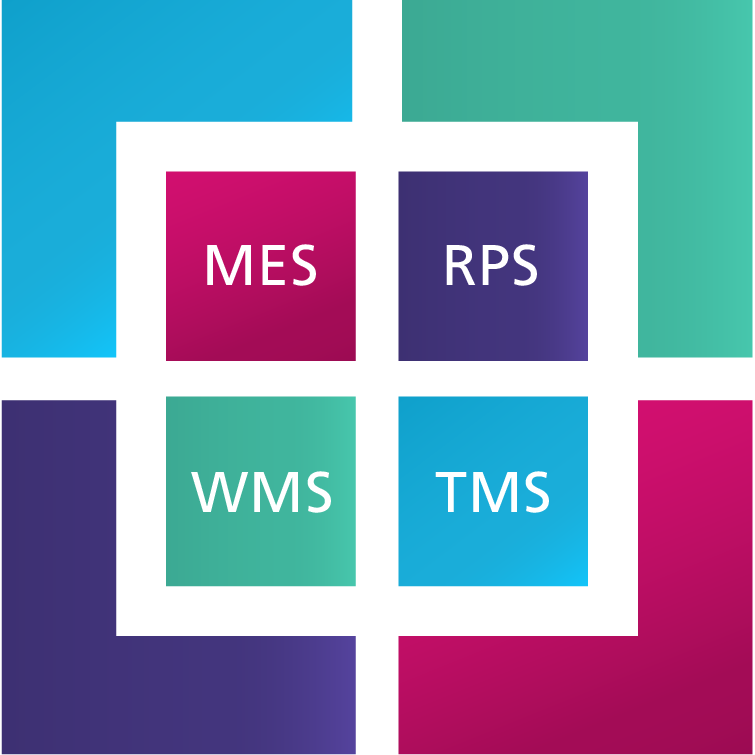
Register as a providerThe term 'logistics IT' refers to software systems that provide digital support for logistics processes and workflows both in internal and external logistics. Using the »Logistics IT Online Selection«, you can compare providers across the four system groups WMS, TMS, RPS and MES. Each questionnaire has been specifically developed for the respective system group and covers the relevant technical aspects.
Definition of knock-out criteria that the selected system group (e.g. WMS) must meet. Exclusion of unsuitable systems from further consideration.
Definition of knock-out criteria that the selected system group (e.g. WMS) must meet. Exclusion of unsuitable systems from further consideration.
Weighting of individual categories, questions and aspects using a scale to enable detailed differentiation of requirements and precise evaluation.
Functional ranking of the systems within the selected system group for the defined requirements profile.
Start for free nowFunctional ranking of the systems within the selected system group for the defined requirements profile.
Start for free nowA service provided by Fraunhofer IML, with over 25 years' experience in the implementation of logistics IT systems.
The team at Fraunhofer IML carries out its assessments on the basis of specific criteria and in a manufacturer-neutral manner. There is no influence from providers, and all data is collected, checked and validated in accordance with scientific standards.
Reduce your time-to-market and cut the costs of system selection in the long term. Our systematic, data-driven approach minimises investment risks and costly project delays right from the start.
Through annual validation cycles, we ensure that our questionnaires always reflect current market requirements and technological developments. The entire process is certified to DIN EN ISO 9001 and guarantees consistently high data quality.
Our comprehensive questionnaire covers all aspects that may be relevant when selecting a system. As the project progresses, it helps to clarify which requirements are actually necessary for your specific project and which are not.
Get started with no obligation using the free access and use the knock-out criteria to draw up an initial longlist of suitable systems. If you like the approach, purchase Premium access for a detailed product comparison.
The platform offers a range of access options tailored to the specific needs of users, consultants and providers. This ensures that all users have access to exactly the features they need to carry out their tasks.