
The 25th »warehouse logistics« Participant Meeting
Once a year, the »warehouse logistics« community gathers for a participant meeting to exchange views on current developments, discuss future prospects, and network in person. The event is organized by the »warehouse logistics« team and has a 25-year tradition. All providers who have listed a logistics IT system on the “warehouse logistics” platform are invited.
Validation Cycle 2026 Completed: Logistics IT Database Is Updated
The »warehouse logistics« team has validated all logistics IT systems listed on warehouse-logistics.com, thereby bringing the Logistics IT Database up to date.

Usability Check for Logistics Software: When the Interface Becomes a Stumbling Block
Logistics software must work—that goes without saying. But does it also work for the people who use it every day? Software ergonomics and the design of the graphical user interface (GUI) are critical to acceptance, efficiency, and the success of an implementation. For this purpose, Fraunhofer IML has developed a structured Usability Check for logistics software within the "Picking Lab" project of the Leistungszentrum Logistik & IT, specifically identifying potentials for improving user experience, efficiency, and process reliability.

Testing Phases in the Implementation of Logistics IT: How to Achieve a Successful Go-Live
The implementation of new logistics IT is among the most complex projects in intralogistics. Whether a Warehouse Management System (WMS), Transport Management System (TMS), or other logistics software—errors during go-live can cause delivery delays, inventory discrepancies, process interruptions, and substantial additional costs. The success of such a project therefore depends not solely on selecting the right software, but above all on a structured testing strategy. Systematic testing phases make it possible to identify defects early, minimize technical risks, and ensure software quality prior to live operations. At the same time, documented tests and acceptances establish transparency, facilitate collaboration between the client and software vendor, and form the basis for legally compliant project execution.
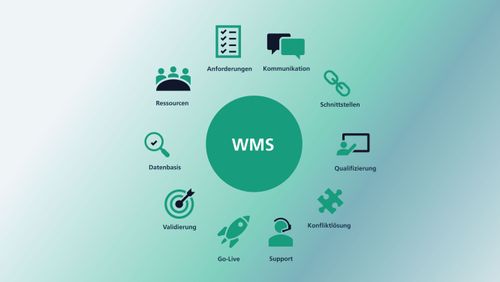
Successfully Implementing a WMS: Ten Success Factors for Stable Projects
The implementation of a Warehouse Management System (WMS) is far more than a pure IT venture: it is a strategic project that transforms operational procedures in the warehouse, administrative processes, and cross-departmental collaboration. Implemented correctly, a WMS improves inventory visibility, reduces sources of error, supports order processing, and establishes the foundation for stable, standardized processes. For the transition into regular operation to succeed, all core fields of action must be structured and managed bindingly from the outset.
WMS Selection: Data-Based Path to the Right Logistics Software
A Warehouse Management System (WMS) controls, monitors, and optimizes core intralogistics processes—from goods receipt to internal warehouse operations and goods issue. Because systems, vendors, and services on the market vary significantly, selecting a suitable WMS becomes a strategic decision with long-term impact.

Perspectives on Logistics IT: Key Insights from the Gallery Walk 2025
Requirements for modern logistics IT are changing rapidly. Topics such as artificial intelligence, robotics, automation, data integration, and cybersecurity increasingly shape the development of future logistics systems. Within the scope of the Gallery Walk 2025, experts from the »warehouse logistics« community discussed current challenges and future developments in logistics IT. The results demonstrate which requirements companies will place on logistics software in the future and which trends will sustainably impact the industry.
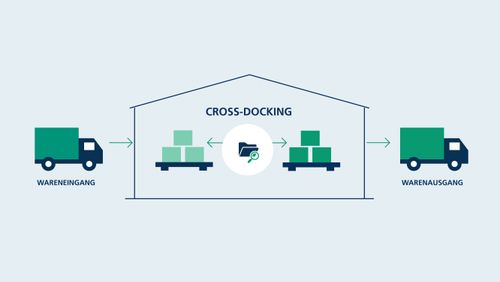
Faster from Goods Receipt to Shipping: Cross-Docking in the WMS
Cross-docking is among the powerful advanced functionalities of modern warehouse management systems and is steadily gaining importance alongside increasing demands for delivery speed and efficiency. By routing goods directly from goods receipt to goods issue, warehouse capacities are relieved, throughput times are shortened, and unnecessary warehouse movements are avoided. This allows process costs to be reduced and delivery performance to be improved. A prerequisite for this is that the warehouse management system automatically identifies suitable goods and directs the material flow accordingly.

Value Added Services in the Warehouse Management System
Value Added Services (VAS) are among the essential advanced functionalities of modern warehouse management systems. They encompass all value-adding services performed in addition to classic warehouse processes. Typically, a logistics service provider executes these services on behalf of the inventory owner and subsequently invoices the customer. The spectrum ranges from simple activities such as price tagging or labeling products to assembling complete component subassemblies, for instance in the automotive sector.
No results
Try a different filter.