AI Agents in Logistics IT: Between Potential and Responsibility
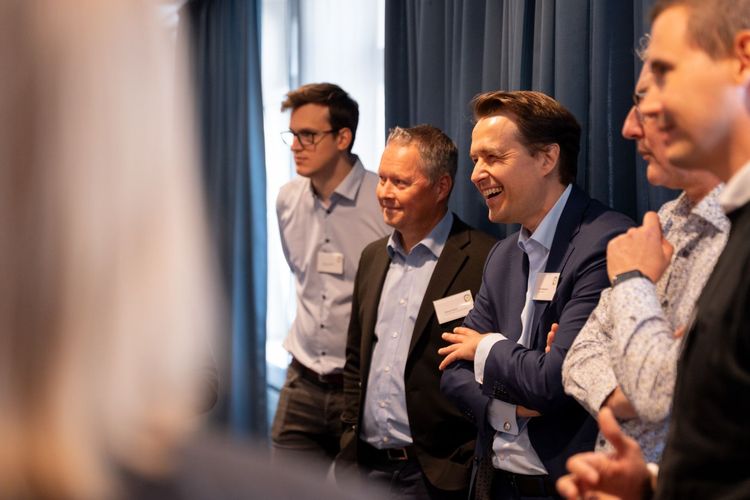
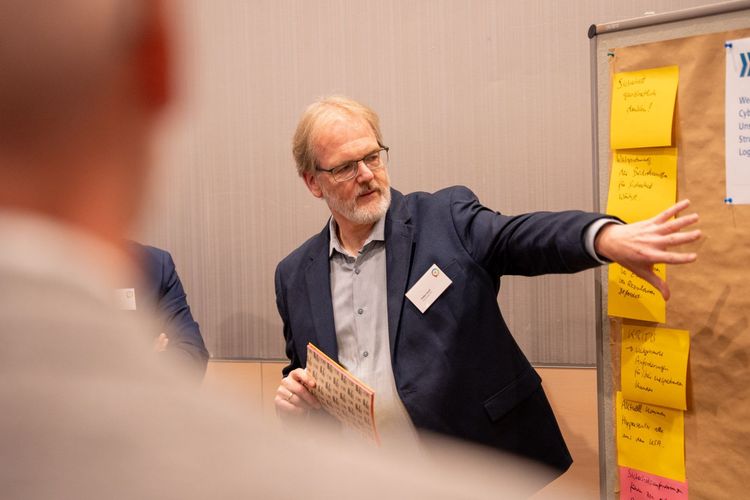
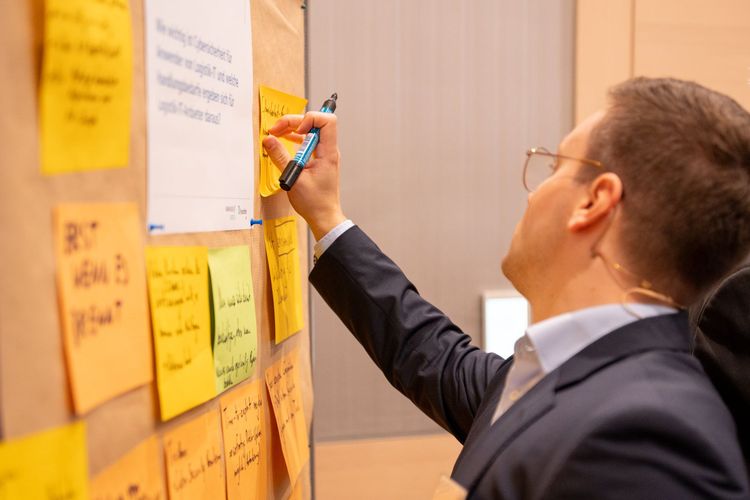
As part of the Gallery Walk 2026, which took place during the participant meeting of »warehouse logistics«, participants discussed possible fields of application, prerequisites, and limits of AI agents in logistics IT. The following insights reflect the assessments and discussion contributions of the participants.

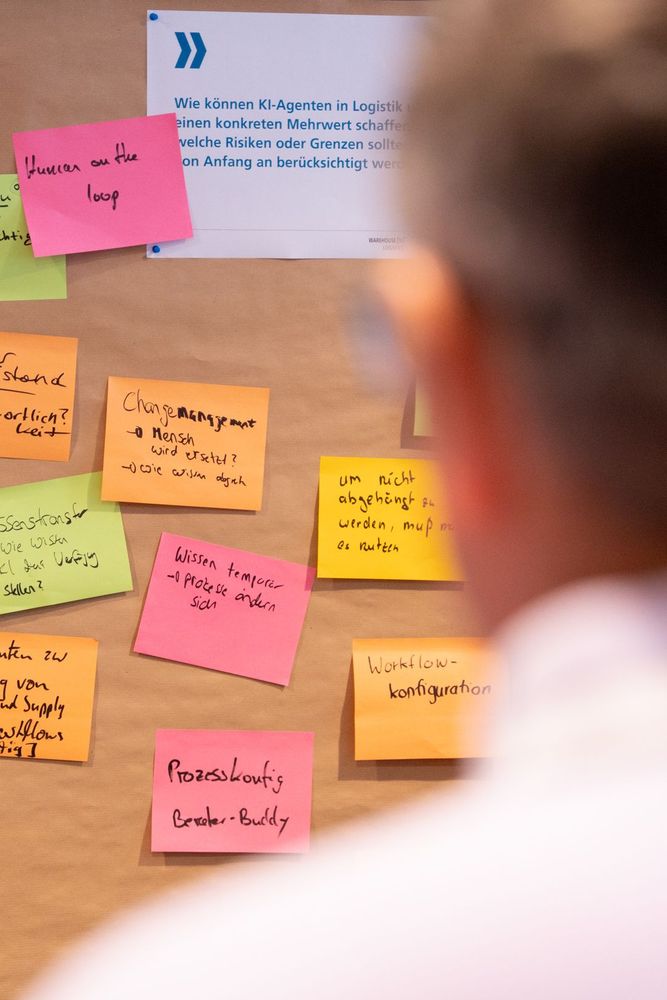
© Vinzenz Neugebauer - Fraunhofer IML
From Human in the Loop to Human out of the Loop
A central question of the discussion was the future role of humans in interaction with AI agents. While humans today still frequently accompany and approve individual work steps, their role could increasingly shift toward monitoring processes. In the long term, a scenario was also discussed in which AI agents largely take over tasks and decisions independently. This, however, raises the question of where human responsibility ends and how decisions remain traceable when processes are no longer fully controlled by humans.
Where do participants see concrete added value?
Possible fields of application mentioned included automated reporting, support for ordering processes, as well as research on competitors and projects. Potential was also seen in the creation of test cases, the optimization of KPIs, and quality assurance. From the participants’ perspective, particularly interesting is the possibility that AI agents could in the future independently create and configure workflows for WMS and supply chain processes. A flexible control center was also discussed as a possible future scenario.
Data and Knowledge as a Foundation
From the participants’ point of view, a reliable data foundation is a prerequisite for the successful use of AI agents. The quality of the results depends significantly on which data is available and how regularly it is checked and updated. At the same time, the significance of knowledge is changing. Since processes and framework conditions are continuously evolving, knowledge and experience must also be continuously exchanged and updated between humans and AI.
Errors remain part of the system
The current error-proneness of AI was also viewed critically. What matters, therefore, is not only avoiding errors as much as possible, but also handling them correctly. Employees must be able to assess results, recognize anomalies, and intervene when necessary. The more strongly AI agents are integrated into operational processes, the more important a fundamental understanding of the systems and clear rules for human intervention become.
What does this mean for employees?
In addition to the technical possibilities, the change in the working world was discussed. The question of whether AI agents will replace human tasks and jobs in the future was openly addressed. At the same time, it became clear: from the participants’ perspective, those who close themselves off from the topic of AI risk falling behind. The training of young talent must also evolve accordingly if certain tasks are increasingly taken over by AI.
Economic viability and dependency
In addition to the benefits, economic and strategic risks were also considered. Currently, the use of AI is still largely supported by investments and subsidized offerings. Whether these applications will pay off economically in the long term therefore remains partly open. The growing dependency on AI systems was also discussed critically. This raises the question of at what point companies become so heavily reliant on AI-supported processes that a return to purely human-controlled operations is hardly possible anymore.
Conclusion
The discussion at the Gallery Walk shows: AI agents will change logistics IT, but the concrete shape of this development remains open. From the participants’ perspective, great potential lies particularly in automated analyses, process support, and, looking ahead, in the independent design of workflows. At the same time, data quality, error-proneness, responsibilities, economic viability, and the role of humans remain central challenges. The decisive question is therefore not only: “What can AI agents take over?” - but rather: “Which decisions do we actually want to leave to them?”
This insight is just an extract from the results of the Gallery Walk. The full summary of all the results is available to download https://www.warehouse-logistics.com/en/publications/perspectives-on-logistics-it-results-of-the-gallery-walk-2026