Cybersecurity: A Prerequisite for Resilient Logistics IT
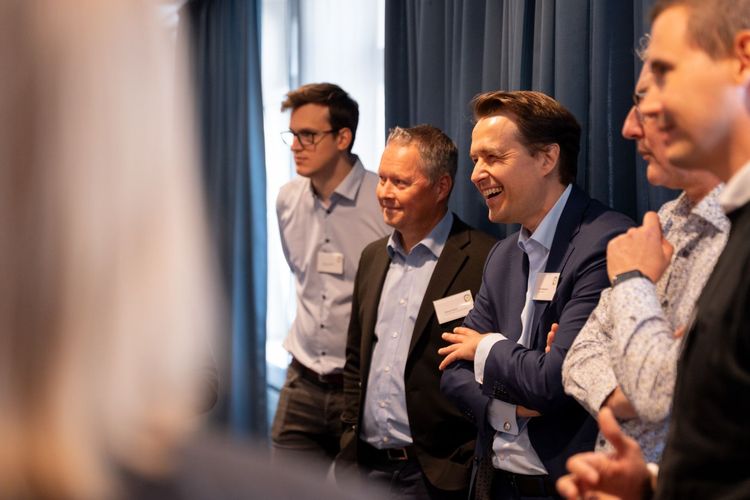
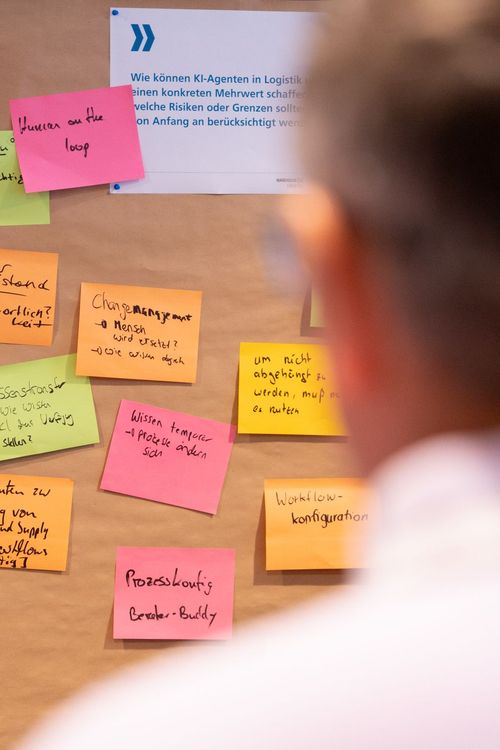
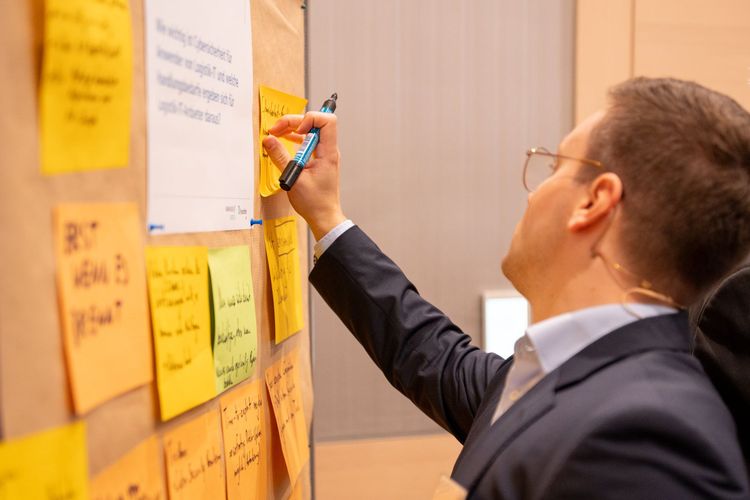
Cyber threats, increasing regulatory requirements and geopolitical uncertainties are increasingly challenging companies and logistics IT providers to make their IT structures resilient and secure. It is no longer simply a matter of protecting individual systems, but rather of considering the interaction between technology, people, organisations and external dependencies. The impact of these developments on the operation of logistics IT systems and the challenges arising from them were discussed during the 2026 Gallery Walk at the participant meeting of the »warehouse logistics« community. The following sections summarise the assessments, experiences and perspectives shared by the participants.

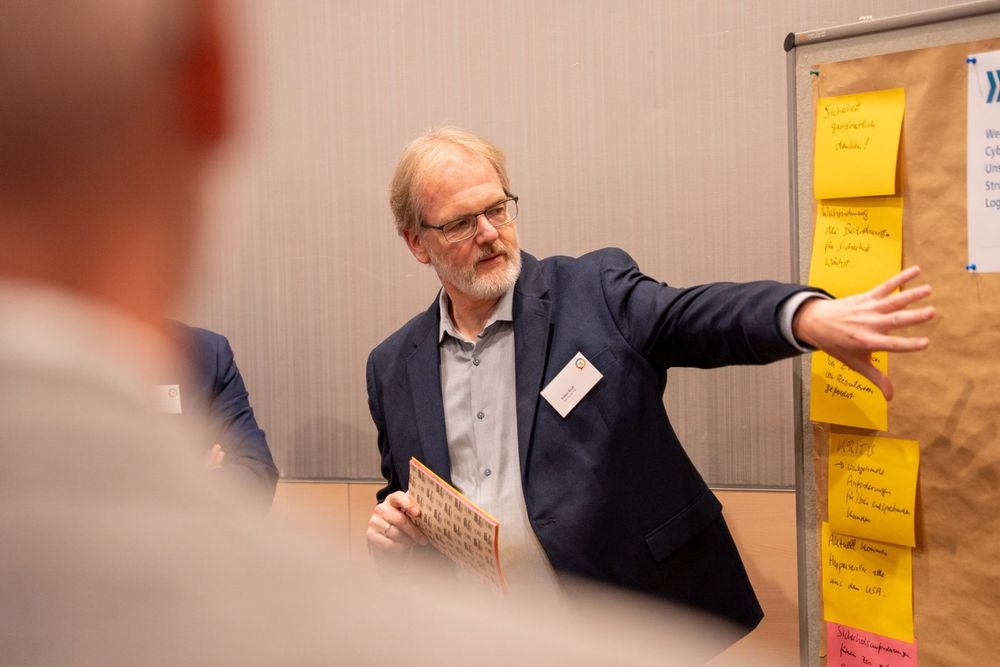
© Vinzenz Neugebauer - Fraunhofer IML
Security must be considered holistically
According to the participants, awareness of cyber threats and their impact on the operation of logistics IT systems is increasing significantly. Security must be considered holistically: the focus is not on individual systems or components – in principle, all systems and interfaces can represent potential points of attack. Accordingly, approaches such as »Secure by Design« and regulatory requirements, for example through NIS2 and the Cyber Resilience Act (CRA), are becoming increasingly important. At the same time, growing security requirements are leading to additional bureaucracy and increasing effort for both companies and providers.
People as a key factor
From the participants’ perspective, people remain a key factor. Employees continue to represent a comparatively easy entry point for attackers, for example due to insufficiently secured end devices or a lack of awareness of potential attack vectors. Training and continuous awareness-raising are therefore essential components of a resilient IT structure. This applies not only to a company’s own employees: during the Gallery Walk, support was identified in particular as a potential major entry point for attacks. For providers, this raises the question of how support structures will need to be designed in the future to minimise risks. In addition to technical measures, standards as well as further requirements regarding the qualifications and vetting of employees may become increasingly important.
Professionalisation on both sides
At the same time, the participants observed increasing professionalisation on both sides. Software and security mechanisms are becoming more secure through measures such as certifications, patches and timely updates. At the same time, cyberattacks are also becoming more sophisticated and professional. As a result, increasing resources are being allocated to cyber defence that are no longer available for optimising and further developing systems. In addition, customers are not always equally willing to pay for a higher level of security.
Nevertheless, the discussion showed that security topics now also play a central role in the sales of logistics IT systems and are increasingly being actively raised by customers.
The right infrastructure remains a key question
Another central topic of the discussion was the appropriate infrastructure. According to the participants, smaller companies in particular are increasingly moving from traditional on-premise solutions towards (virtual) private clouds. Larger companies, on the other hand, continue in some cases to favour on-premise structures – partly because they feel that this gives them greater control over their own infrastructure. Regardless of the architecture chosen, however, the participants agreed that the technical solution alone cannot provide security if the people and organisations involved are not considered to the same extent.
Taking geopolitical dependencies into account
Geopolitical dependencies were also discussed during the Gallery Walk as a relevant factor when assessing resilience. For example, the major hyperscalers are currently based in the United States, while key security components such as firewalls are sometimes sourced from the United States or China. This can create conflicts between technical security measures and a company’s own risk management.
According to the participants, customers are increasingly interested in the dependencies and external services used by their IT providers – including questions such as how quickly it would be possible to switch cloud providers.
More connectivity means greater risk assessment efforts
As connectivity increases, so does the effort required to assess risks. New interfaces require new risk assessments, while existing risk assessments can already involve a considerable amount of time. As an example, participants cited an effort of up to ten hours to complete a single questionnaire during the Gallery Walk. Increasing security and documentation requirements are therefore themselves becoming a significant resource factor.
Being prepared for the worst-case scenario
From the participants’ perspective, this makes preparation for an actual security incident increasingly important alongside prevention. The discussion was characterised by the view that companies should assume that they will sooner or later be affected by a cyberattack themselves. A well-prepared recovery plan is therefore essential for every company in order to respond quickly and systematically in an emergency and restore operations.
Open communication about security incidents is equally important. According to the participants, transparent exchange between companies and providers can help organisations learn from incidents and further strengthen resilience.
Cybersecurity as an ongoing responsibility
Overall, the Gallery Walk discussion shows that cybersecurity is increasingly being understood as an ongoing responsibility rather than merely a technical issue. Regulatory requirements, technical security measures, employees, partners and service providers, as well as geopolitical dependencies, must be considered together. At the same time, awareness of these issues is increasing significantly – among both providers and users. IT security is therefore evolving from an additional requirement into a fundamental prerequisite for the resilient operation of logistics IT systems.
This insight is just an extract from the results of the Gallery Walk. The full summary of all the results is available to download https://www.warehouse-logistics.com/en/publications/perspectives-on-logistics-it-results-of-the-gallery-walk-2026